


 24 / 168

Events & Festivals
Historic Sites
Hong Kong has more than
100 officially declared historic
monuments. These include
colonial buildings, Chinese
walled villages, ancestral
halls, and ancient stone
carvings and other types of
historical buildings.
A great way to explore the
significant buildings of Hong
Kong, both old and new, is by
taking a Hong Kong Heritage
Walk (see Tours, page
C-36).
Feng Shui
Literally translated as “wind and water”, feng shui is the
practice of positioning objects in harmony with nature to
create good fortune. Visitors can learn more about this
ancient Chinese belief by joining a feng shui tour, which
will show how feng shui has influenced the design
and position of even the most modern Hong Kong
developments (see Tours, page
C-35).
Fortune-telling
Palmistry, the Chinese horoscope, phrenology and
physiognomy are common traditional ways of predicting
the future. Advice can be sought at the Sik Sik Yuen
Wong Tai Sin Temple, Man Mo Temple and many other
temples, as well as at the Temple Street Night Market.
Some of the fortune-tellers at these places speak
English.
Calligraphy
Chinese calligraphy is a unique Chinese artform, and
there are many skilled practitioners in Hong Kong. Walk
along Cat Street and Hollywood Road on Hong Kong
Island to find collections of exquisite calligraphy on
scrolls and fans.
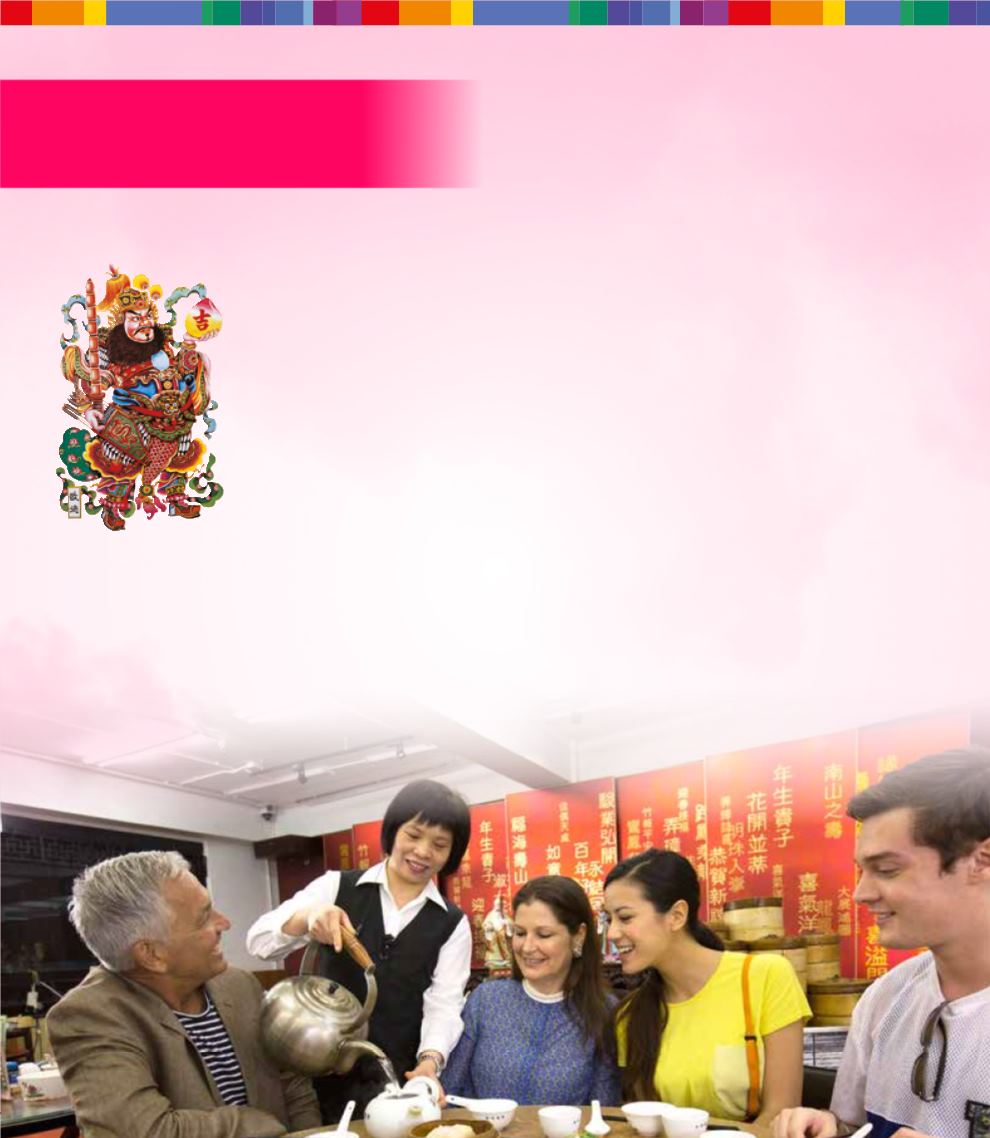
Traditional Food
Hong Kong is a paradise for fans of Chinese food, and
there are many ways for visitors to sample traditional
Chinese fare, such as visits to traditional markets, farms
and seafood hotspots. Tea-making demonstrations and
lectures are available at a few traditional tea stores.
Visitors can also learn how to prepare a recipe by
joining cooking classes (see Dining, page
E-07 ).
Heritage & Traditional
Culture